More than 50,000 trees have been planted across the Mount Lofty Ranges as part of a decade-long effort to restore habitat for threatened woodland birds.
The work has improved habitat across more than 18,000 hectares of farmland, through partnerships between landholders, community groups and government agencies.
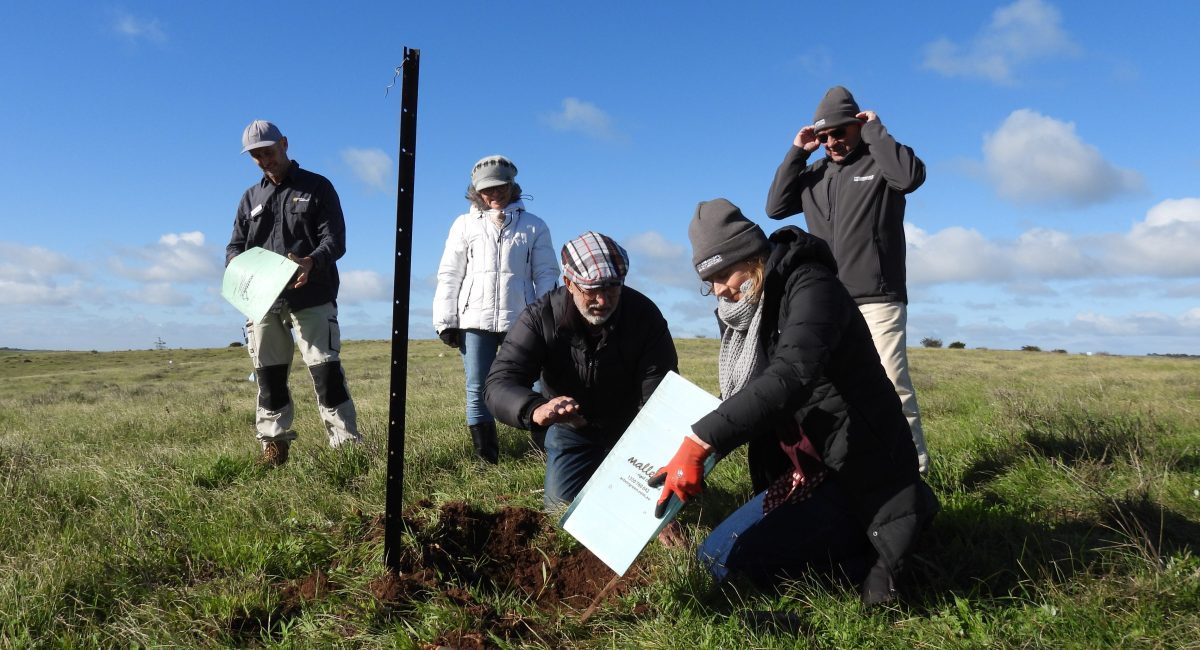
Since 2016, Trees For Life’s Paddock Tree Project has helped establish and protect more than 32,000 paddock trees across almost 18,000 hectares of productive farmland.
A separate project led by Second Nature Conservancy has planted more than 20,000 locally native trees across 200 hectares of conservation-focused and non-productive properties.
Dr Wendy Telfer from Landscapes Hills and Fleurieu said the projects demonstrate how habitat restoration could be tailored to different landscapes and land uses.
“Different landholders have different goals, opportunities and constraints. In some places, that means integrating paddock trees into productive farming systems. In others, it means restoring habitat features across conservation-focused properties,” Dr Telfer said.
The projects form part of ReBird the Ranges, a collaboration involving 25 organisations working to reverse the decline of woodland birds across the Mount Lofty Ranges.
One of the properties involved in the project is at St Ives, where Robert and Glenda Mock partnered with Second Nature Conservancy to enhance habitat for woodland birds on their steep 150- acre property.
“As we are both over 70 now, the support has been invaluable in helping us achieve our revegetation goals,” Robert Mock said.
“Elegant Parrots, Rainbow Bee-eaters and Red-browed Finches seem to agree that our place is good to move into now. We can sense that the Diamond Firetails won’t be far behind as they are only a kilometre away.”
The project was delivered by Landscapes Hills and Fleurieu, the Department for Environment and Water, Trees For Life and Second Nature Conservancy, with support from the Landscape Priorities Fund and the South Australian Government.